
Puppies teethe. Just like any ordinary human baby, those baby teeth will come out, and…

Things you need to know about that are potential hazards for your cats and dogs at Christmas
Christmas is a special and busy time of the year for many of us. Even the pets! Everyone gets a stocking in our house, and the pets are no exception!
Christmas is magical, full of fairy lights, hot chocolate, presents and turkey.
If you have pets, you’re probably familiar with some of the hazards that Christmas can bring for your cats and dogs. It usually includes some weird and wonderful way of protecting the Christmas tree from wagging tails or curious cats. (Cue the stream of videos featuring cats pulling down Christmas trees on Facebook in the coming weeks.)
But accidents can still happen when we least expect them. If you want to avoid those accidents happening at the exact worst moment (like when you’re about to sit down for Christmas dinner and the vets are closed), then this blog walks you through some of the top things to look out for, including hidden hazards you might not have even thought about.
If you’re ready for a safe and stress-free Christmas with your pets, read on.
1.Food at Christmas that isn’t dog or cat-friendly
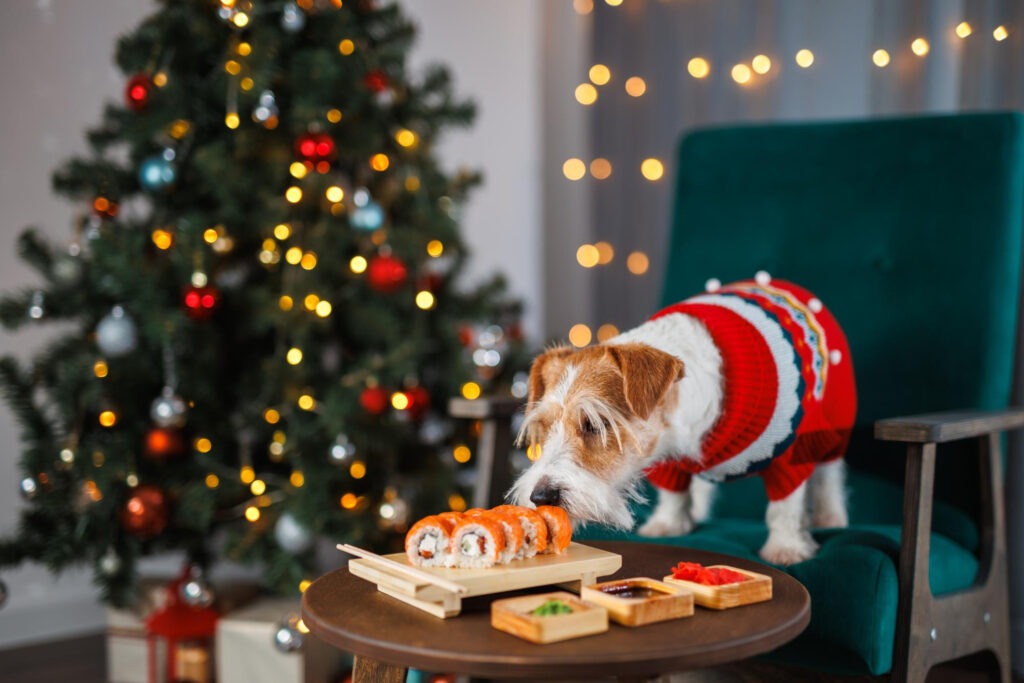
Let’s start with the most obvious hazards. Food. Our dogs are prewired to beg; it’s part and parcel of their nature. It’s survival.
Christmas is a time when food is everywhere, so it’s super hard for them to resist all those lovely smells. Who can blame them? We humans are also quite distracted, so it’s a lot easier to leave things lying around – open boxes of chocolate or mince pies.
Here’s a list of the everyday things at Christmas that are toxic to dogs and cats:
- Chocolate
- Raisins
- Grapes
- Mince pies
- Christmas pudding
- Onions/garlic – that includes food that has these hidden inside things like stuffing
HOT TIPS
- Make sure everyone in the family knows these are toxic to your dogs and cats, so they put things back in cupboards when they’re finished preparing food and immediately discard any leftovers.
- If you have ‘bin divers’, make sure your bins are secure, or in a place your dogs can’t get to. If your pet does happen to consume any of the above, give your vet a ring asap. It’s very hard to make a judgment call with some of these foods. For example, a Chihuahua could eat a bar of chocolate and be fine, whereas an Alsatian might eat one square with fatal consequences. A chat with your vet will help you decide what to do.
- If you catch it quickly, it’s likely your vet will recommend an injection to make them sick. But other things can be done, so don’t panic.
- If your vet is closed, their voicemail should give you details of the out-of-hours emergency vets.
2. Decorations that aren’t pet-friendly for dogs or cats
It’s hard to do Christmas without decorations right? Lights, tinsel and baubles. It’s what makes it so magical!
Lots of Christmas decorations are actually quite small so sadly pose as choking hazards for both dogs and cats.
Tinsel and Baubles – Tinsel is oh so much fun for cats to play with! And baubles look like excellent balls. But they’re usually made of thin plastic and are easily breakable.
Fairy Lights – Fairy lights and cables are another decoration that need to be well out of reach and inaccessible to both curious dogs and cats.
You can also set timers to make sure they’re fully switched off at night for really persistent offenders. We’d recommend making sure your pets can’t access the Christmas tree at night or anything else that might get them into trouble!
Candles – If this is your first year with your new pet, you might want to reconsider where you burn candles. Keep them well out of reach of your pets on sturdy surfaces. There are lots of great electric candle alternatives on the market nowadays that give the same effect if you feel more comfortable going candle-free this year. The same applies to wax warmers. Wagging tails at excited visitors is usually enough to clear a coffee table! So be vigilant.
3. Visitors at Christmas
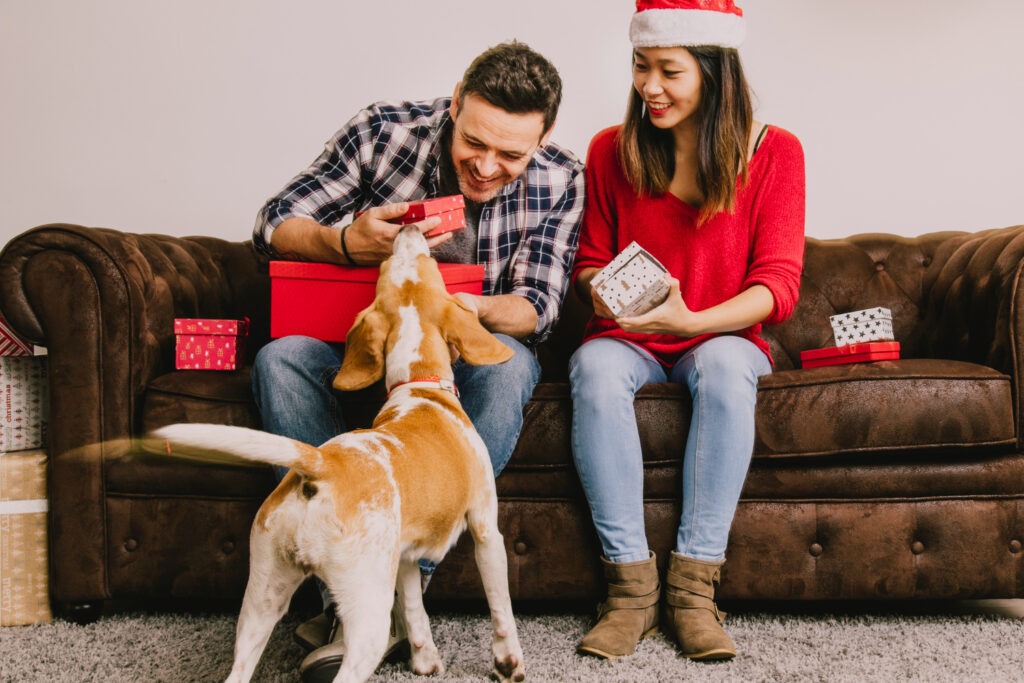
Visitors? How is that a hazard for your furry besties? A lot of dogs are perfectly fine around large groups of people. But you know your own pets – if you’ve got a dog that’s slightly anxious or older, then lots of visitors they’ve not seen for a while (or young children running around screaming) can seem like a pretty scary experience for them. And when dogs are scared, they lash out. It’s instinctive; they really don’t know any different.
Even if you’re not expecting your dog to react badly, dogs can be, by their very nature, unpredictable. So there are a few key things you can do to set them (and your visitors!) up for success.
- When people arrive, have your dog behind gates or in another room – this gives them a chance to relax and take in the situation.
- Ask your visitors to be calm (or ignore them) when you do let them out to say hello, this will keep their excitement down (excitement is only a skip away from anxiousness so keeping things chilled really does help).
- Tell your visitors your dog can be a bit anxious.
- If you have young children visiting and your dog’s happy in another room, you need to weigh up whether it’s worth mixing them together. Afterall, if your dog’s not going to see them for another year, now probably isn’t the time to ‘socialise’ them with small children!
Biting accidents happen more around Christmas because of the overwhelming situations we ‘feel’ we have to put them in. It’s okay to give our anxious dogs a little time off the celebrations – if they could talk, they’d probably thank you for it!
4. Other toxic hazards for your dogs and cats at Christmas
It’s not just food -there are other toxicities lying around the place that our cheeky little pups can get their little paws on. Here are a few to keep an eye out for
Batteries – why does everything need SO many batteries? If you’ve got young children, you’ve probably got SHARES in batteries! Please don’t leave them lying around, ever. They are highly toxic and dangerous, so on Christmas morning, when you’re spending hours putting all those toys together, remember to keep them out of reach.
If you think your dog has swallowed one, has a chemical smell on their breath, or has some burnt-looking areas in the mouth, get help right away.
Antifreeze – another common one that can be hanging around, as this is the time of year. Many a vet has encountered this with cats, as they’re drawn to its sweet taste!
It can leak from cars too, so it’s not always obvious where they’ve got it from. If your cat (or dog) has consumed antifreeze, there will be obvious signs such as wobbly walking, vomiting, rapid breathing, and increased thirst. See your vet immediately as it’s highly toxic, and they ideally need treatment quickly!
Poinsettias – not life-threatening, but still toxic and can make your pets very poorly, so keep away from your cats or choose safer options.
Pine needles – real trees are amazing. They SMELL amazing. But sadly, the pine needles can cause a lot of bother for our little friends. If eaten, the needles can puncture the mouth or throat, and when swallowed, they can even damage the gut. Oils from the tree can be mildly toxic and make your pup feel very poorly.
We’d also highly recommend that you don’t let your dog drink the tree water. This can end up mouldy, full of bacteria, and even contain fertilisers. Yuk!
So there you have it. It sounds like a lot! But really, it’s all about being mindful.
And if you want to get your pets a special little treat for Christmas day to keep them entertained then we’ve got TONS of great picks for you to choose from.
Go and shop our Christmas toys here, and then you can click and collect from our Pet Shop. We’re located just north of Peterborough and not far from Stamford in the market town of Market Deeping.
Related Posts


